
Haddonfield Duct Repair and Cleaning: What a Few Feathers Revealed
In late summer 2026, small bird feathers started coming through the supply vents at a Haddonfield office building. The staff knew something was wrong. They called Duct Doctor of Southern New Jersey for duct cleaning, concerned that a bird had gotten into the ductwork.
It was a reasonable concern. Foreign debris was reaching the occupied rooms, and the staff wanted the ducts cleaned and treated. But when we surveyed the systems, we found a much bigger problem hidden above the second-floor ceiling.
The trouble was above the office
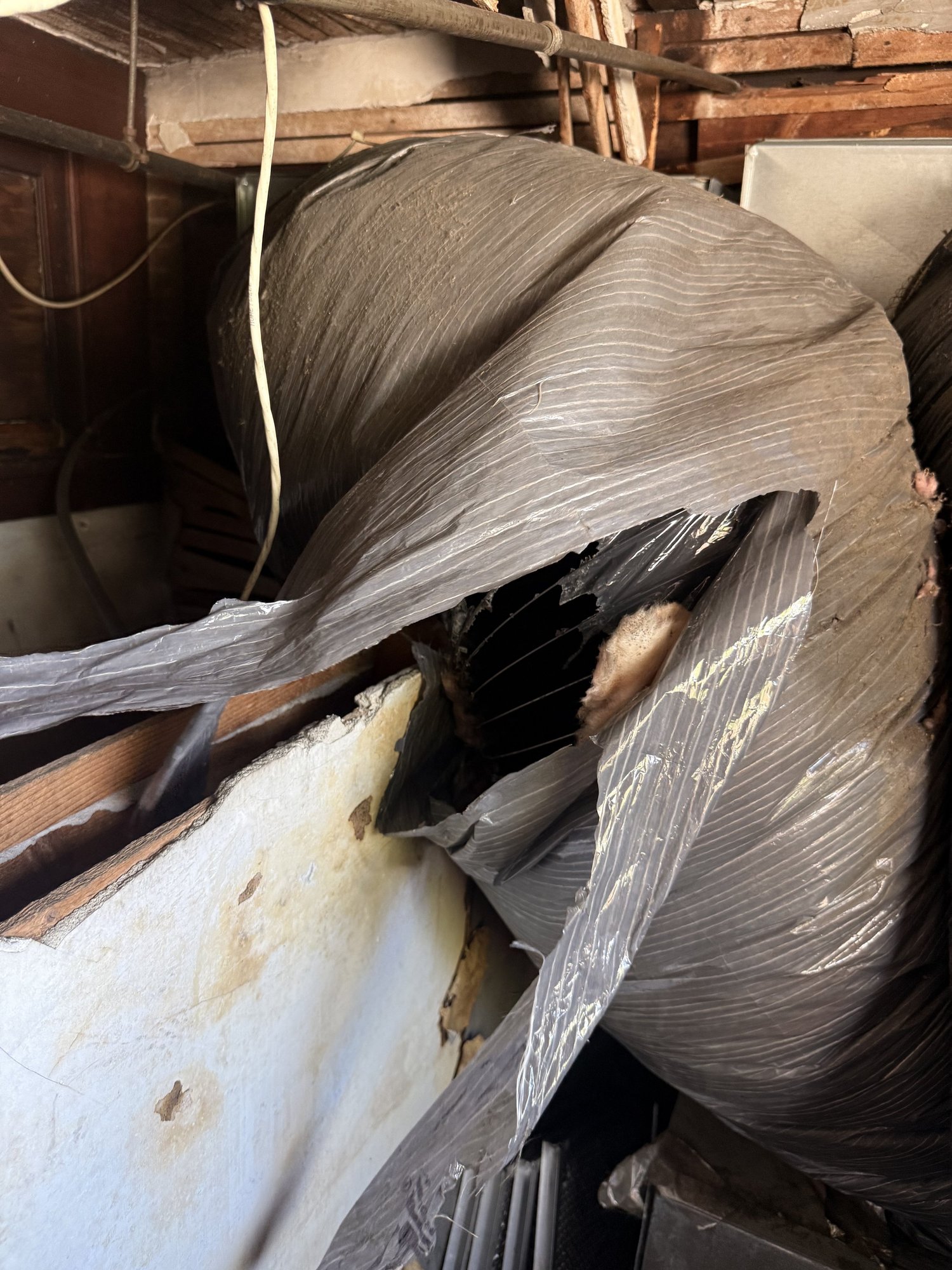
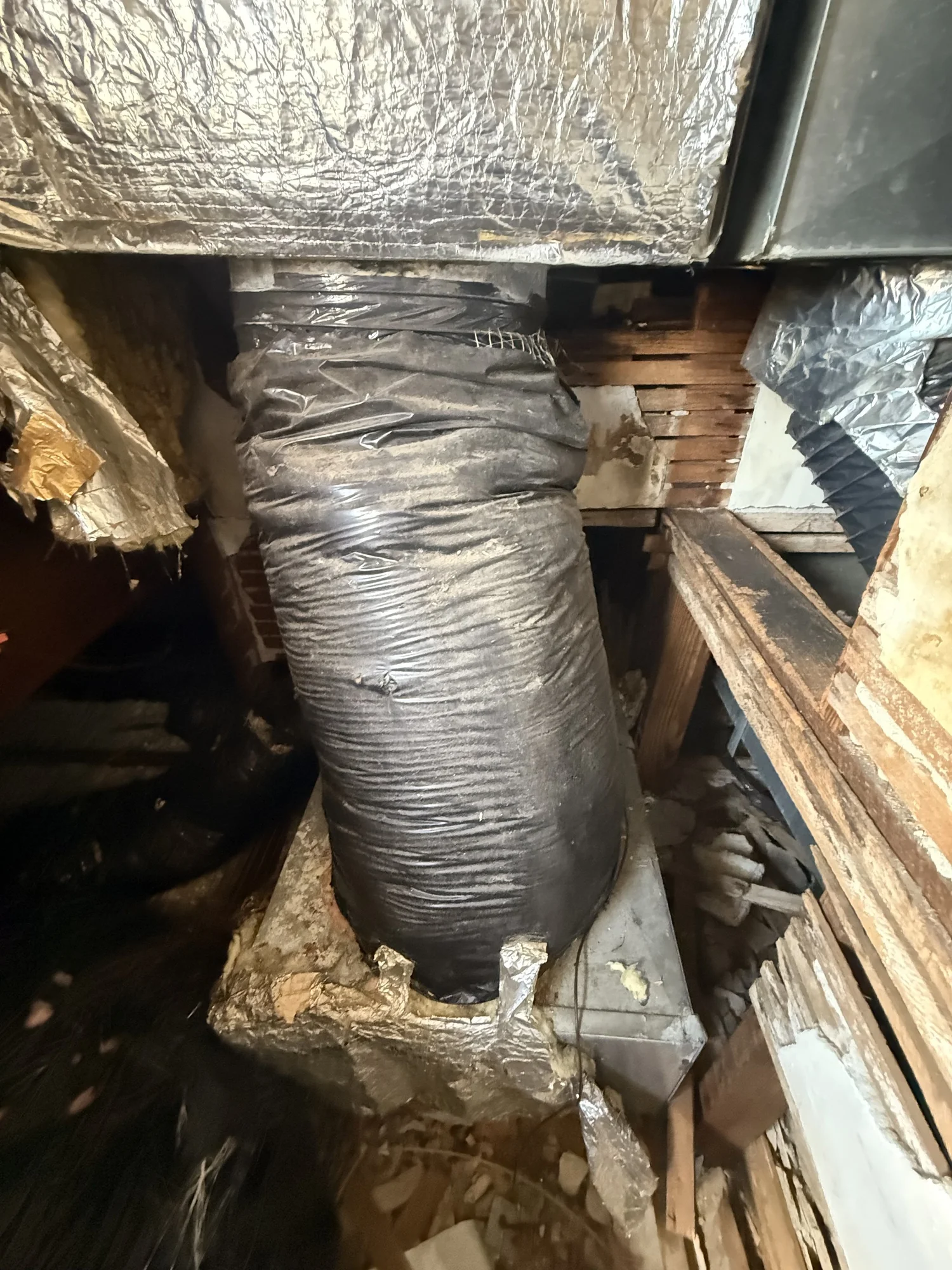
Animals had been getting into the shallow roof cavity without the people below knowing it. Insulated flexible ducts were torn, insulation was missing, and some connections had pulled apart. That was only part of the story: we also found installation defects, including disconnected ductwork and openings left unclosed.
A major portion of the air from the two rooftop systems was escaping into the roof cavity instead of reaching the offices. This was far beyond a few small leaks. It was a serious comfort and utility-cost problem: the business was paying to heat and cool air that was not being delivered where it was needed. Open return ductwork was also pulling air and debris from the cavity back into the systems.
One problem, several different skills
The client had called for cleaning. Getting them to the right outcome required much more: diagnosing the duct failures, identifying the repairs, planning access and logistics, and deciding how to correct an installation that was not functioning properly. Simply cleaning the ducts would have left the torn connections and open sections in place.
We developed a repair-to-cleaning plan so the work could be completed in the right order. The goal was to restore connected, supported and sealed ductwork, then remove the accumulated material and apply the appropriate antimicrobial treatment.
Making the installation work as it should
Much of the work had to be done in a space only about 18 to 20 inches high. Our technicians worked carefully around the framing, wiring and existing ducts to remove damaged material and install replacements.
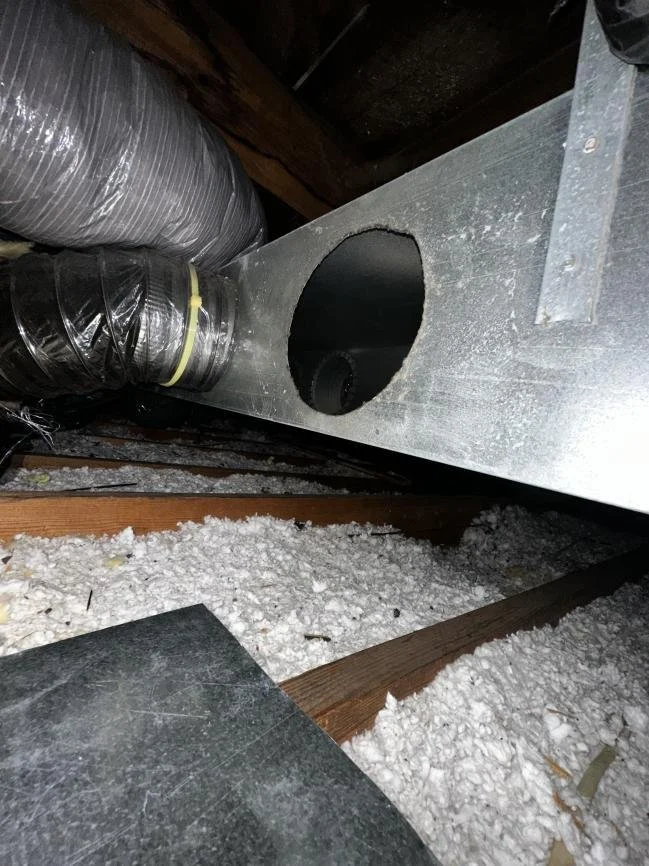
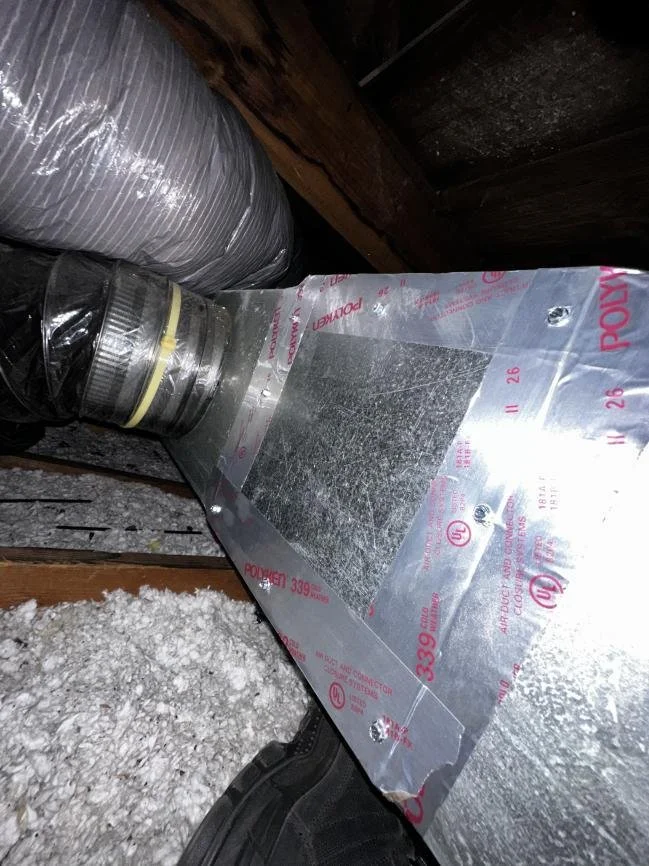
We replaced the four large 16-inch flexible-duct connections serving the rooftop units, repaired or replaced damaged smaller runs, and closed several openings in the metal ductwork. The photographs show the difference between the damaged ducts we found and the repairs that followed.
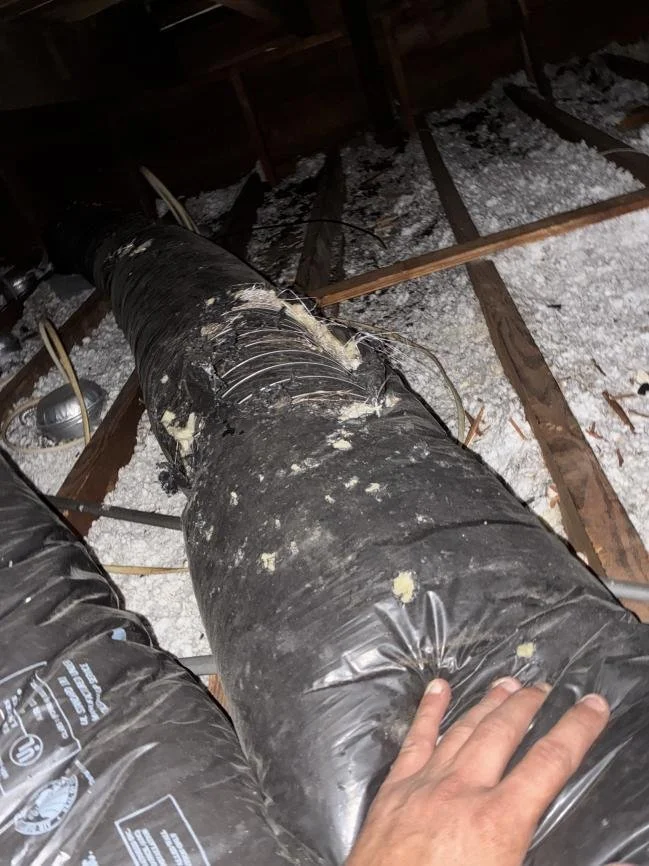
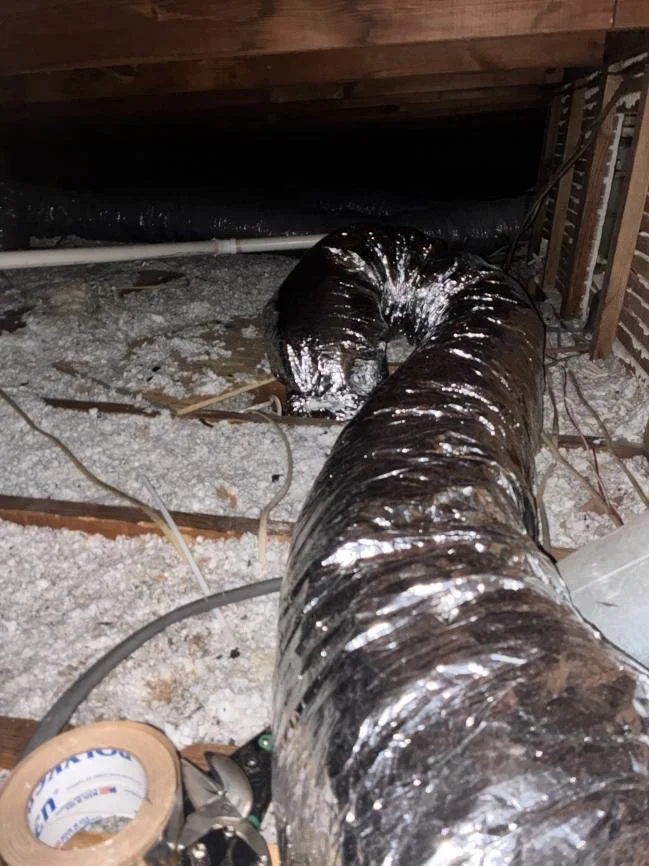
Not every problem was an animal-damaged duct. An open cutout in the return trunk needed a sheet-metal closure and a properly sealed perimeter. Leaving it open would have left the return drawing air from the roof cavity even after cleaning.
Cleaning, treatment—and another repair to finish
With the duct repairs complete, we returned to clean all three systems—the two rooftop systems and the basement system. Mechanical cleaning removed the accumulated material; the sanitation step followed with application of antimicrobial encapsulant.
There was another installation problem at the ceiling registers. One had already fallen out and was lying on the floor. Several others had gaps at the ceiling and were working loose. While handling the registers during cleaning, we repaired their fastening, anchored them securely and restored their fit against the ceiling. We also addressed small basement duct repairs. The completed service was accepted by staff on site.
We also pointed out building openings that needed pest-exclusion attention. Repairing the ducts and cleaning them mattered, but keeping animals from getting back into the roof cavity was another part of protecting the work.
More than a duct-cleaning appointment
A couple of feathers started the conversation, but the solution required several specialties working together: inspection and diagnosis, planning, duct replacement and alteration, sealing, cleaning, antimicrobial treatment, and register repair.
Indoor-air-quality problems can be multifaceted. This project needed a specialist with the training, experience and range of services to recognize the different problems and carry the duct-system work through—not just complete a cleaning while leaving the other defects behind.
That is the practical value of Duct Doctor of Southern New Jersey as a one-stop resource for duct cleaning, repair, replacement, modification and treatment. We could diagnose the problem, explain what needed to happen, and perform the different parts of the work under one coordinated plan.
Need duct cleaning or a consultation for possible repairs?
Tell us what you are noticing. Debris coming through a vent, visible duct damage, or concerns about how the system is delivering air are good reasons to take a closer look. We provide duct cleaning and repair consultations for homes and commercial properties throughout South Jersey.
Explore commercial duct cleaning · Home and small-business duct cleaning
Call (856) 375-1776 or email southjersey@ductdoctor.com. Office hours: Monday–Friday, 9:00 AM–5:00 PM.
About the Author
Anthony J. Micale III owns and operates Duct Doctor of Southern New Jersey. He holds Air Systems Cleaning Specialist (ASCS) and Ventilation System Mold Remediator (VSMR) credentials through NADCA and has personally inspected and cleaned thousands of residential and commercial HVAC systems. His articles draw on that field experience to explain source-removal duct cleaning, dryer-vent service and HVAC-system hygiene. Duct Doctor is a locally owned, fully insured and bonded NADCA member company based in Cherry Hill, New Jersey.